




HomeCute & CuddlyFriends of a FeatherWet & WildHome on My BackAboutContact

Tuesday, March 26, 2013

Introduction to Squeaky the Rat

Hello Critter Lovers!!
My name is Heather Byers and I'm the author of The Busy Busy Hive blog.  I am so excited to be able to share on this wonderful blog.  I {Puffy} Heart animals, especially ones in the classroom.  I have an unusual pet in my classroom { at least my kiddos' parents think so}.  I have a pet rat.
I think it's his tail that sets people off to rats.  Squeaky is my 3rd classroom pet rat.  He loves to snuggle, be held and he acts a lot like a cat.
 
I was first intoduced to rats as classroom pets when I was teaching 5th grade my 1st year as a teacher.
My partner teacher had 13 rats {yep 13 that wasn't a typo}as pets in her classroom.  She also talked about how calm and wonderful they were as pets and the kids loved them.  That year I had gerbils and hamsters as class pets.  Needless to say both of those types were not my ideal pet.  The gerbils were too fast to handle and the hamsters kept escaping out of their cage.  Not that hamsters and gerbils don't make good pets.  They just weren't the right ones for me and my classroom.  When I started teaching 1st grade I decided to try a pet rat.  I had found my ideal classroom pet.  I will probably always have a rat in my classroom now. 
pet rat
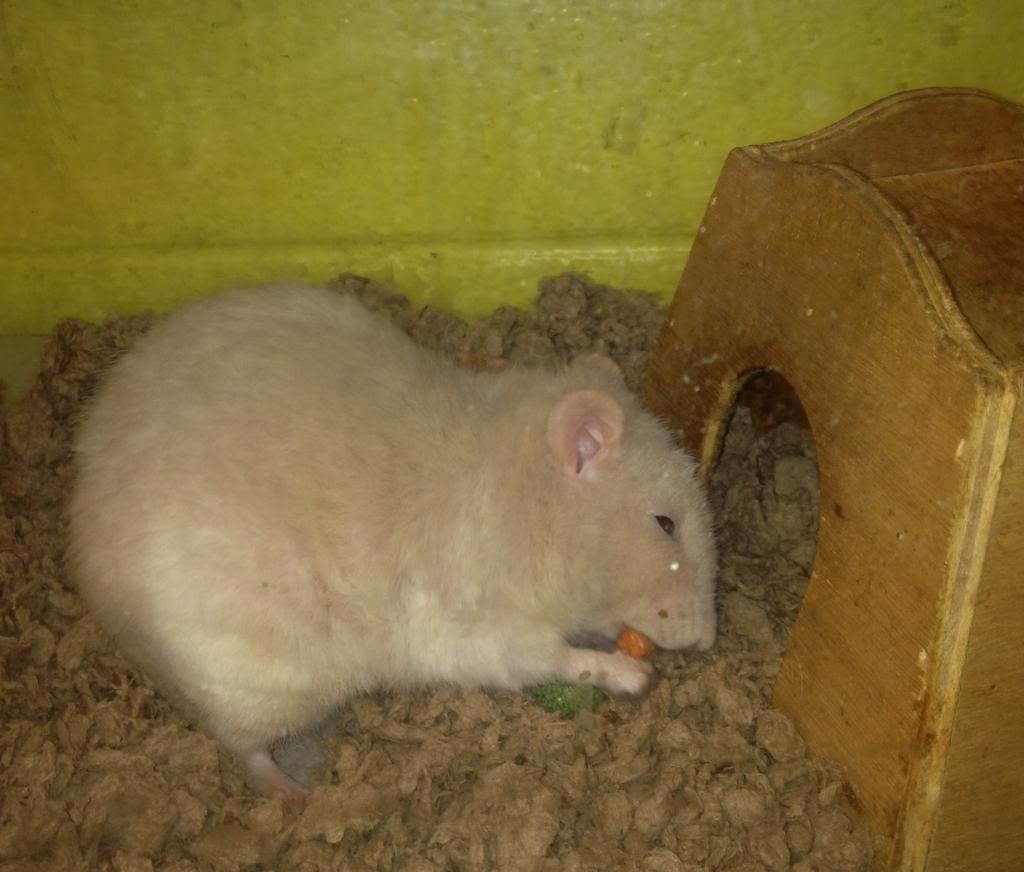
Squeaky eating his snack.
His favorite part  of the day is snack time.  He always ends up with some banana or apple from someone's snack.  Squeaky is quiet and very good with the kids.  My own kids love it when its Spring break or Summer Vacation because they know that Squeaky will be home.
 
Squeaky
Do you have anything good to eat?
Thank you for reading this little intro to Squeaky.
Squeaky and I look forward to sharing even more
about our classroom adventures and happenings in the future.


Friday, March 22, 2013

C&C Guinea Pig Cages

 My guinea pigs, Daisy and Chrysanthemum,  live in a huge C & C cage.  You can purchase them on the Guinea Pig Cages Store website or read about how to make them on Cavy Spirit's Guinea Pig Cages website.

Yes, that is a litter box in the corner and yes they use it!  They don't use it like a cat would.  They really just use it because it is in the corner they want to use as a bathroom.  The trick is to put something they would not want to defecate on in the other corners.  This "trains" them to go in the litter box.  I place the houses, food, and water bottle in the other cornes.  I use basic non-clumping cat litter for the litter box.   Guinea pigs do not jump, so they do not need a lid on the cage.  They do climb or hop on top of their houses.  The cage is still high enough that they cannot get out.  

I use Carefresh Natural Pet Bedding to fill the cage.  Before I place the bedding in the cage, I line the cage with chart paper.  This makes it easier to clean at the end of the week.  I also use a dust pan to get out the old bedding.  

I hope you liked this peak at my piggies' palace!  You must check out some of the creations people have made!  This lady has a guinea pig room...those pigs are living the life!

Saturday, February 2, 2013

Birds in the Classroom: Part 1: Introduction

My name is Maya and I am a preschool teacher from O'ahu, Hawaii, with a passion for birds.  Previously, I have always had fish as pets because they have been easiest to care for and were the only realistic pet I could keep in past classroom environments.  My classrooms in the past have either had no ventilation or light (wooden jealousy windows) when I wasn't there or have been at a location that did not allow pets other than fish.   

This school year I was moved to a campus where I have my own portable with central air, many large windows, and is a space where I can have more than just fish.  I didn't intend to have birds as classroom pets because they are a very big responsibility - and I will discuss this in detail later - and I have my own parrot at home but, through a long and sad story of people who couldn't keep their birds anymore, I ended up with little bundles of feathers in my class in August 2012.

Meet Froot Loop, an American Cinnamon Pied lovebird.
Meet Crunchberry, a Medium Green (split to Orangefaced) lovebird.
If you are thinking of a bird as a classroom pet, there are many things you will need to think about.  Some questions to ask yourself:
- Will the noise of a bird(s) distract your students or disrupt learning?
- Are you financially able to provide for the bird(s) care and vet bills?
- Are you willing to cook for the bird(s)?
- Are you able to designate a space in your classroom for a large cage and activity area?
- Will you leave the bird(s) in the classroom or take them home at night, on weekends, on breaks?
- If you plan to leave them in the class, does your classroom provide ventilation at night and light on weekends?

While birds are absolutely adorable, they are a very big responsibility - think two year olds that never grow up - and can be a big financial burden.  In coming blog posts, I will go over what should be required in order to have birds as classroom pets.  Part two will discuss the diet these feathered friends need.

To be continued...

Monday, October 22, 2012

a sure cure for arachnophobia {freebie}

each year I hand this poem out a poem to my kids called A Murder in the Garden {freebie at the end}and they think I am all kinds of crazy! What kind of teacher gives out a poem about murder to seven year olds!

Well, maybe a teacher who lets you hold a tarantula!

IMG_1885

Yep, I finally let the students pet Hairyette. They were so excited. Only three students kind of stayed back out of the way. And one eventually couldn't help themselves and came over with us. Since we are in the midst of a measurement unit and spiders I figured it had to be done!

Of course I started with my recess gloves on. Then I loosened up and just let her crawl on me sans gloves. The kids know a fall can kill this fragile pet and were very good about not bombarding me. Even though we know they are covered in hair, they were still shocked at how soft she is.

IMG_1886 

IMG_1884   IMG_1882

After a minute or two we started measuring. Her legs are 2" long, her cephalothorax is about 1" across, and her total body length is 4". Just a little gal! And I just impressed you with my bog words didn't I?! Well, I impressed the kiddos today too. I told them I spent my weekend writing an arachnid book for our class and learned all kinds of new information. Like daddy long legs are not poisonous-we already knew that they aren't spiders, but harvestman. I had heard they were super poisonous but their mouths were too small to bite a human.

IMG_1890  IMG_1891  IMG_1892

and here’s where she ended up! Why do all animals go into hair?? I was really trying to prevent a fall {ignore the bad hair day today!}

IMG_1897      IMG_1899

If you wanna impress your kiddos, snag my little arachnid love mini pack!

and grab the Murder in the Garden poem for free!

and my arachnids need love Venn for free too

I hate recreating the wheel and so many of you amazing bloggers have already made bat and spider units, so I sure wasn't going to!

Happy Halloween!

Monday, September 3, 2012

Amphibians in the classroom...

 
Big Daddy on the way to FIRE Expo

     A great way to check out unusual critter possibilities, is to attend an expo like Repticon. My family usually attends the ones that are within an hour from home. Last weekend, we loaded up and headed out to FIRE in Orlando with "Big Daddy" our bearded dragon, navigating! This trip we focused on amphibians. Our local pet store just went out of business (we are very sad about this) and we were able to purchase great exoterra and zoomed tanks for more than half off. My husband found a website called Josh's Frogs and we ordered everything we would need for some frog habitats. We decided on White's Tree Frogs. Otherwise known as "Dumpy" frogs, these tree frogs are from Australia and Indonesia, and are great for beginners. They eat fruit flies, crickets, and other small insects. It is a calm frog and one of the few that you can actually hold. And I did not realize this until we got home, but they grow up to four inches and live up to sixteen years. :) We have a lot of time to bond. Our two new family members are "Glitzy" and "Olive".

Look closely and you will notice "Olive" in the upper left corner.

Saturday, August 18, 2012

Reptiles in the classroom

"Big Daddy"

     I love critters of all shapes and sizes! Last year, I was the fortunate recipient of a donated bearded dragon. Someone in our community had purchased a bearded dragon (and every imaginable accessory) for his family. They enjoyed "Big Daddy" for a while and then the kids got older and had interests that kept them on the go. So, one day the office pages me and says they have a donation for the science lab. I walk to the office and a gentleman says it is outside in his car. When he opened the back of his suv and I saw our newest addition, I have to admit I was a little frightened. I did not want to hold him for several weeks. Thank goodness, it was love at first sight for my husband, so he took good care of him until I was comfortable. It didn't take long, and "Big Daddy" won my heart. He really does have a lot of personality. And the students love him!
     When you have something you love, sometimes you need more than one...so, bearded dragon #2 joins us this year. I was able to get "Bubba" through a "Pets in the Classroom" grant. I want the students to be able to watch him grow ("Big Daddy" came to us full grown). The students do a great job of taking care of our lab pets. They feed them, clean their cages (with my asssistance), they do research on them, making sure their habitat and diet are correct. We have even started growing crops for them to eat (greens, carrots, certain fruits) and insects for them (crickets, silkworms, and superworms). Bearded dragons are easy to maintain. They use the bathroom once a day to once every other day and are funny about wanting their cage cleaned immediately. They are friendly, docile, and inquisitive. They are much friendlier than our gerbil who now lives at my house (biter). Bearded dragons are recommended for reptile beginners. And they are safe for students with allergies.    


"Bubba"

Our newest reptile is "Forrest Gump" the chameleon. More coming soon on chameleons! They are such interesting critters! Make sure to stop by my lab pet page @ Superlative Science to see my other critters!


Friday, August 3, 2012

Critters in the Classroom!


Hey Critter Friends,
You might just have to come on over and grab this freebie to add to your critter area in your classroom. He is so cute you can hardly stand it, right? He is free as free can be!